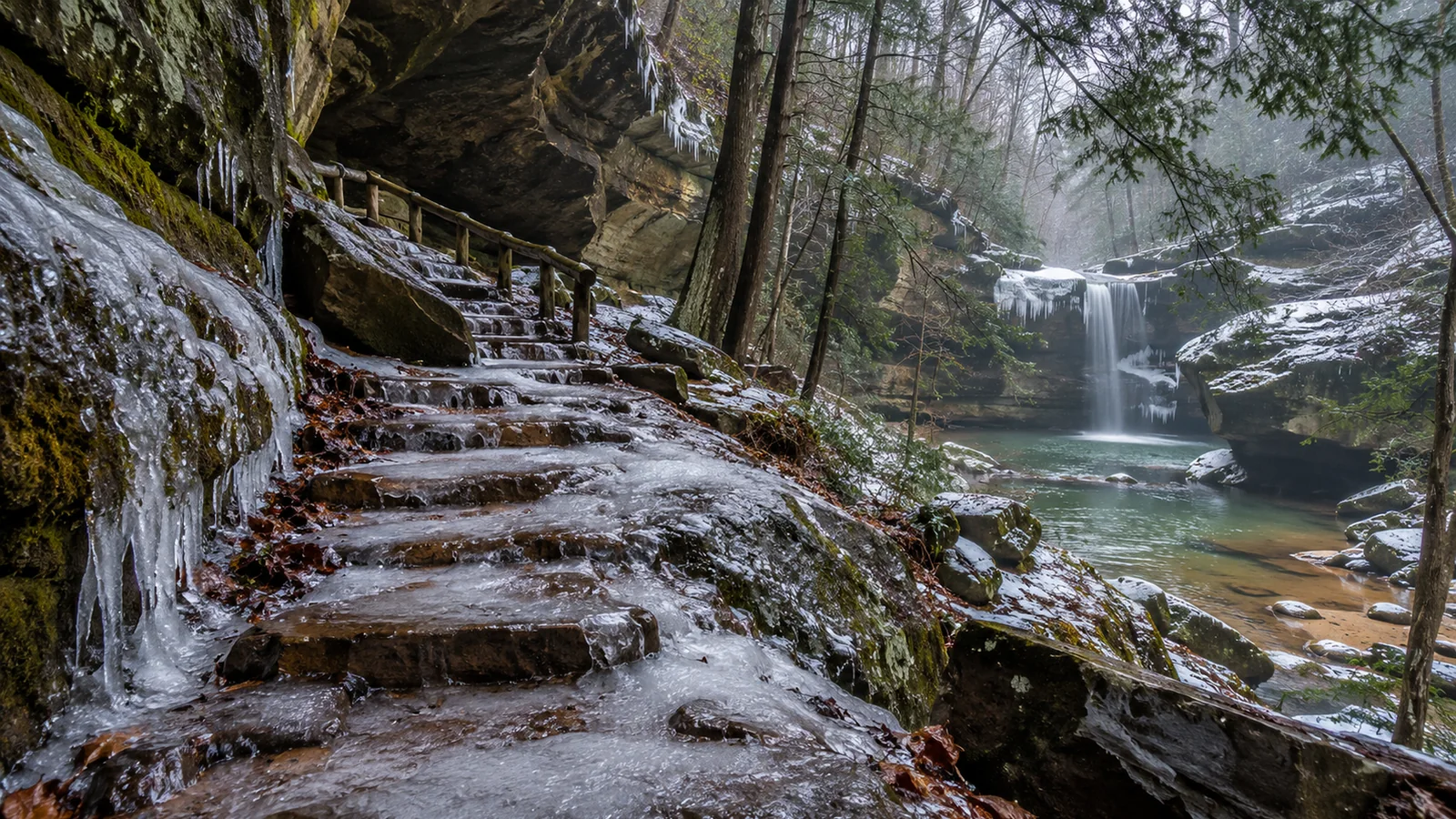
Freeze-Thaw Hocking: When the Trail Looks Fine at the Parking Lot but Turns Icy Below
The dangerous winter hike is not always the snowy one. It is the 42-degree afternoon where the parking lot is wet and the shaded stone staircase is still glazed in ice.
Hocking Hills can change surface conditions within a few hundred vertical feet and a few minutes of walking. Open roads and sunlit parking lots warm faster than shaded gorges, recess caves and stone staircases. That means a day that feels like spring at the trailhead can still behave like winter below the rim.
Ohio DNR’s own statewide trail data recognizes that trail difficulty can vary with environmental conditions including floods, ice and snow. In Hocking Hills, that is not fine print. It is the whole decision.
The freeze-thaw pattern to watch
- Night temperatures drop below freezing.
- Daytime temperatures climb above freezing.
- Snow or ice melts on exposed surfaces.
- Water runs into shaded steps, rock and gorge sections.
- Those surfaces refreeze before the next warm-up reaches them.
The result is patchy ice: bare dirt, wet stone, then suddenly a polished frozen section where the trail bends into shade.
Parking-lot conditions tell you almost nothing
Use the lot to judge precipitation and general weather, not trail traction. If you are hiking a gorge route, assume the coldest shaded section is the condition you need to be equipped for.
What changes after rain
Rain can improve waterfall flow and make Hocking Hills spectacular. It can also make sandstone slick, increase runoff, and turn lower areas into the worst place to discover that your shoes have no grip. After a storm, choose the trail for the conditions, not just the waterfall photo you want.
A simple winter kit
- Footwear with real tread, not smooth lifestyle sneakers.
- Warm layer you can remove on climbs.
- Gloves that still let you use railings safely.
- Offline directions because cell coverage can be poor.
- Extra time so you are never racing the park closing at dark.
When to choose an easier outing
If the group includes young children, someone with balance concerns, or anyone who does not have winter footwear, choose the most forgiving route available rather than trying to make a famous gorge behave like a sidewalk. Ash Cave’s accessible approach can be a much smarter winter destination than a stair-heavy route.
The best winter hikers are not the people who never cancel. They are the people who change plans early enough that the day stays fun.
FAQ
Why can Hocking Hills be icy when the parking lot is clear?
Shaded gorge walls, stone steps and recess-cave areas can stay colder than exposed parking areas, so meltwater can remain frozen below even when the lot has thawed.
Are microspikes always required?
Conditions change day to day. Traction devices can help on ice, but no equipment makes every route appropriate; follow current trail guidance and turn around when conditions exceed your ability.
Do Hocking Hills parks stay open after dark?
Current visitor guidance says the parks close at dark except for special scheduled programs.
Current-info sources
- Ohio DNR statewide trail data
- Hocking Hills Frequently Asked Questions
- Hocking Hills Annual Winter Hike
Trail conditions, closures, one-way routing and facility access can change. Check posted signs and current park information when you arrive.
Editorial note: This article is designed as practical trip-planning guidance, not a live trail-condition report. Weather, closures, routing, shuttle operations and accessibility can change.